- UNFLTR Weekly
- Posts
- You are the vehicle for your audience's questions
You are the vehicle for your audience's questions
UNFLTR Weekly #5

Rich Cardona
February 05, 2025

Good morning! Here’s your proof I’m wrote this myself: I’m looking out my window at a dense fog, it’s in the mid 40s, and I’ve been up since 3:46am because I’m a crazy person. These 3 factors combined create such a desire for a nap which is super rare for me and is definitely not happening today. That, and my awesome sneakers that I always get compliments on are tight today for some reason. Check them out!

Now you might want to ask me where I got them, how much they cost, how do they feel or if I’m a sneakerhead. And, if you get the answer(s), it’s a value I provided and you might remember me for that. That is of value to me. This exchange is how content works and we’ll be discussing that down below.
And later, I want to share a communication tip that my team and I have found profoundly valuable.
Welcome back to UNFLTR! The newsletter that helps you untangle your podcast and content hold ups and get moving in the right direction.
Quote of the Week:
“He makes coffee nervous. He’s got THAT much energy.”
At the time I’m writing this, I am on Day 15 of a 21 day fast that includes no caffeine and I’m thinking about coffee…a lot. I thought it was a witty quote so please feel free to steal it!
In today’s UNFLTR we’ll cover”
You are the vehicle for your audience's questions
A simple communication tip that can rid you of forgetting to have conversations you need to have
Answer questions, be top of mind
You want answers. I want answers. We all want answers.
When I learned of and then saw the horrific aviation tragedy in Washington DC last week, I, especially as a former attack helicopter pilot, had questions. So many questions. It was easy to go to news outlets, then X, etc.
It wasn’t simply curiosity. I felt like I had to know all that I could. Once I started reading the most up to date and current info on the mishap is when I could kind of could get back to work.
Yes, I know, not the greatest example, but it’s real to me. But did you notice how the feeling of needing to know was less about information that could benefit me long term and more about immediately reducing my emotions (even if they were a little misplaced)?
We may not realize it, but emotions play a big part in our seeking information that we don’t have. Even if it’s not critical, many of us can get anxious if getting that information is delayed or uncertain.
I can be one of those people. I get hyper fixated on something and next thing I know an hour has gone by. That ever happen to you?
It can be anything - car shopping, how to lose that last 5 pounds, how to avoid caffeine headaches, what Airbnb to choose, learning what camera is the best for a beginner, etc. We want to know what we want to know and besides not wanting to wait very long, we don’t want to put a lot of effort into finding or understanding it. It’s like our brain gets hangry until we have resolution.
And if you want to create stickier podcast or social media content, being a resource is going to help you be remembered.
But how in the world do we know what content to make that can solve problems?
Not creating yet? Or already creating, but stuck?
Don’t stress. Here's what you can do on a micro level:
Join FB groups relevant to your passion or expertise. Yes FB is gross, but it’s a tool.
Pro tip: Join a lot at first so you can determine which ones are truly active each day. Go look at questions, go look at comments, add on if you can or even answer some questions yourself.
In practice: Let’s say I’m a running coach, not a creative, and I want to serve. I have no clue where to begin and I join a few groups. One of the first questions I see is totally in my lane. This is freaking great! Let’s look at it and get ideas going!
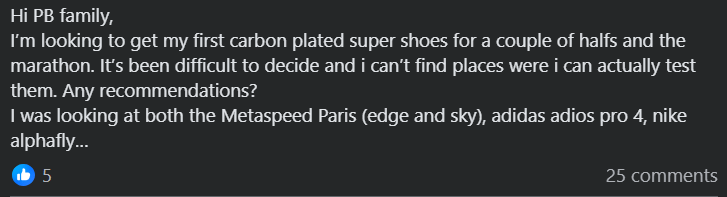
My mind immediately goes to question asking mode (aka content ideas):
Why would a runner use carbon plated shoes?
When is a good time for a runner to transition to them (if at all)?
What are the pros and cons of these shoes?
What are some reputable places or online stores that I trust and can tell people about?
How much do they shoes cost?
How do I chose between all of these types of shoes?
Should people really use these for long distance?
Other ideas:
Do a comparison from these types of shoes
Create unboxing videos
Start a challenge - have people try different shoes for running and give outcomes (running stores usually are good about 30 days returns - so this is viable)
I can go on and on!
The Best Part
Any of those ideas have a medium that can make it happen. This way you can lean on your strengths whether it’s audio (podcast), visual (social media + YT), or written (UNFLTR Weekly). And.. it can be long or short form. (YT video vs a YT short, Blog vs a Tweet)
What you have to work with:
Youtube
Blogs
IG (reels, stories, lives)
FB (posts, reels, stories, lives)
Newsletters
LinkedIn (post, video, poll, newsletter, live)
Reddit Post
Vlog
Infographic
Audiobooks
TikTok
Pinterest
X
Medium,
OnlyFans (if you’re into that),
Amazon Affiliate marketing
Threads etc.
What we know now: You can find ideas and a place that feels right to you and in a way you like to deliver information. Let’s get back to seeking the gold— how to find what people are asking about. In addition to FB you can look in these places in the following categories:
For Industry-Specific Social Media Groups and Forums
Subreddits (I can’t say I do this, but I def get questions of mine answered there!)
LinkedIn Groups
Quora
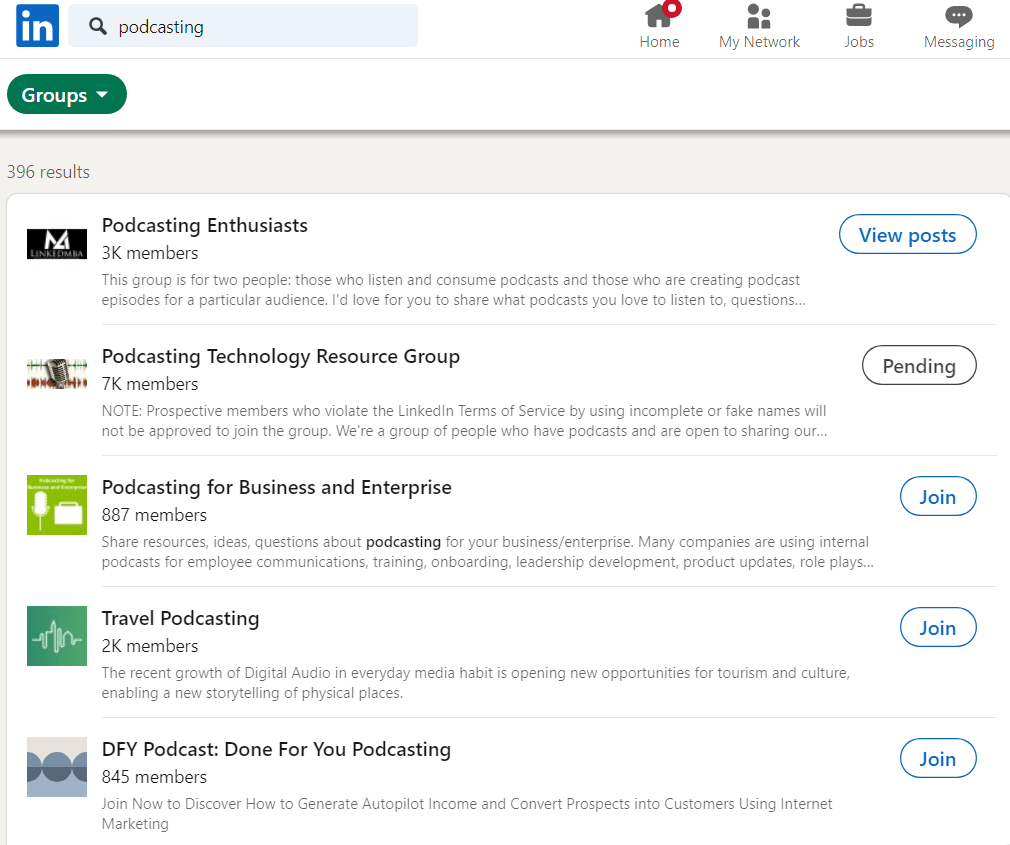
I searched “podcasting” on Linked and got this .. 396 groups
Social Listening Tools
Here is where you’d set up keywords related to your industry to track convos and questions that are being asked on social media, blogs, and news outlets.
Brandwatch
Sprout Social
Hootsuite
Mention
Creep on Your Competitors
You GOT to know what your “competitors” are doing. What are they posting about? Is it working? What get’s good engagement? What doesn’t? Go look!
Ask yourself:
Can I make similar but better content?
You can also track top influencers or thought leaders in the space to see what questions, comments, or tags they’re getting.
Use Keyword Research Tools
Google Trends
Google Keyword Planner
Ahrefs
SEMrush

SEMrush Mind Map View
Type into Google; literally
This is so slept on. Just start typing questions related to your industry in Google’s search bar and look at the suggested results. These are often based on popular searches from other people.
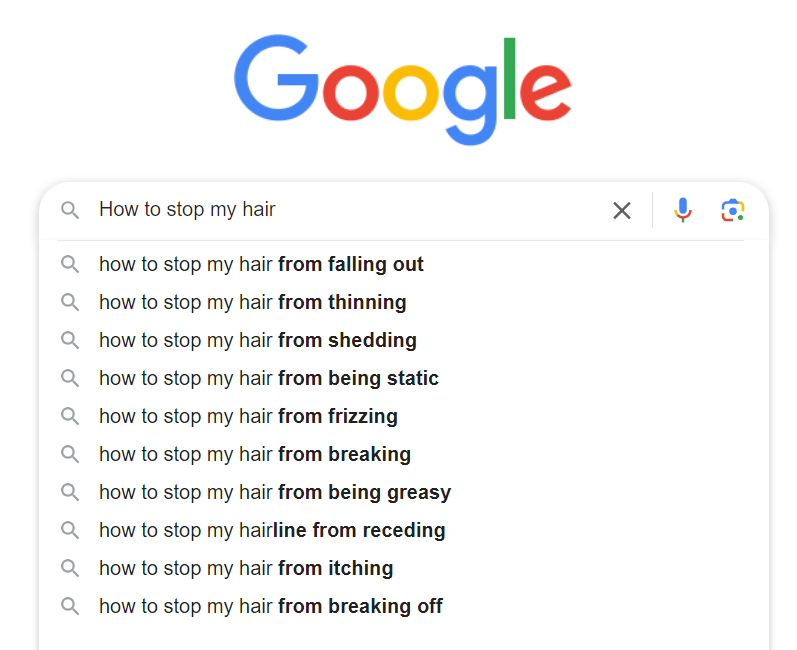
A Barber or Hairdresser just got 10 ideas like that!
Utilize Content Idea Generators
It’s exactly what it says. This feels like it should be amazing but it could be hit or miss.
Answer the Public
Blog Idea Generator from Hubspot
Buzzsumo
A few more:
Look at online reviews (Pat Flynn told me this, it’s genius)
Ask your clients’ sales team if your a business owner. Like literally ask the people on the front lines of the people that pay you. Gold.
Check out YT comments and video content
Follow industry podcasts and listen for questions
ChatGPT of course
What if people are already making this content? They are. That’s the point. We don’t have to reinvent the wheel (you also don’t need to straight up copy other people). I find that we all just need prompts … kind of like ChatGPT. The more specific you are with it, the more it can help. Well, the more time we take to search, the better ideas we’ll get to create about what we know.
It’s also important to be self aware. If you find yourself not knowing the answers to a lot of questions you find - you might need to get back to working on your craft. This means educating yourself AND practical application. Teaching something you just learned will likely expose your lack of expertise.
Lastly, if you’ve done the above exercises and don’t find much content, that means one of two things:
You have a huge opportunity and can lead the way
or
No one cares about that subject much (still an opportunity)
Don’t Question This!
Hopefully you’ve gathered the importance of knowing how to serve people by how they behave is more important than trying to serve them by how you THINK they behave. There’s an enormous difference. But in case you’re still unsure here’s my rationale.
Value from you, for them: When you answer questions, you’re providing immediate value to your audience. People follow IG accounts, subscribe to YT channels, or subscribe to podcasts that solve their problems or fulfill a need. When it’s not fulfilled they need to quench that thirst by finding a person or show who can. You want to be a trustworthy, dependable creator who will show up for them.
Increased engagement: It’s no secret social media algos tend to reward engagement. When you respond to questions or start a conversation around an FAQ, it can lead to more comments, likes, shares, and visibility. People are more likely to engage when they see content that resonates with them or answers their specific needs. This is why I follow communication experts like Vingh Giang and Simon Sinek. I want to get better.
Building authority and expertise: Answering questions with rich comments or content will likely have people saying “They know their shit.” aka they’ll see you as an expert. You provide insights, solutions, and solves - word will get around.
Fostering community: Answering questions can also create a sense of community even if that’s not your thing. It shows you listen to people who have things in common which can lead to deeper connections with your audience. This type of engagement can make people feel like they're part of something bigger. This is a byproduct of podcasting to be clear; purposefully building community is a beast.
Content ideas: Frequently asked questions can serve as a goldmine for content. I feel like we’ve covered this, but don’t overlook that while you search you can LEARN! That’s a twofer!
So, how much of your success would you say can come from engaging directly with your audience, like answering questions or responding to comments? Write me back!
Clarity through Communication
I feel compelled to share a communication tip with you that, when applied religiously, makes my and my team’s life so much better. One of our core values at UNFLTR is “Clarity through Communication” and it rests on 3 simple questions:
What do I know?
Who needs to know?
Do they know?
Let’s say you are going to make a podcast appearance on a good show. Inevitably the host or their team are going to ask you for your headshot, bio, links to your social media handles, etc
This used to, for whatever reason, feel like such an inconvenience to me. So I solved it.
Let’s apply the practice here:
What do I know? We made a folder on Google Drive with all of the above to make the process much simpler. No scrambling, just “here’s a link to everything you need.”
Who needs to know? The host or their team
Do they know? Nope. I forgot to tell them hence the request I got last week.
In real life:
What do I know? I’m traveling to Cincinnati this week to film with clients and to visit a prospect
Who needs to know? My wife and my parents to coordinate with drop offs and pick up for my lovely daughters.
Do they know? Yup. As soon as I knew I told them and the logistics are handled :)
It’s a beautiful thing. Use it!
Thanks for reading UNFLTR today - I’ll see you again next week when we talk about how Mel Robbins over took Joe Rogan in podcast rankings!
— Rich
P.S. Ways to work with me:
1:1 Coaching
Podcast Strategy and Management (Audio only, Video, Full Service, etc)
Filming Day here at the UNFLTR studio in Wilmington, NC
If you want to learn more get in touch with Ellie at [email protected]