- UNFLTR Weekly
- Posts
- Building Loyalty Through Truthful Content?
Building Loyalty Through Truthful Content?
UNFLTR Weekly #4

Rich Cardona
January 28, 2025

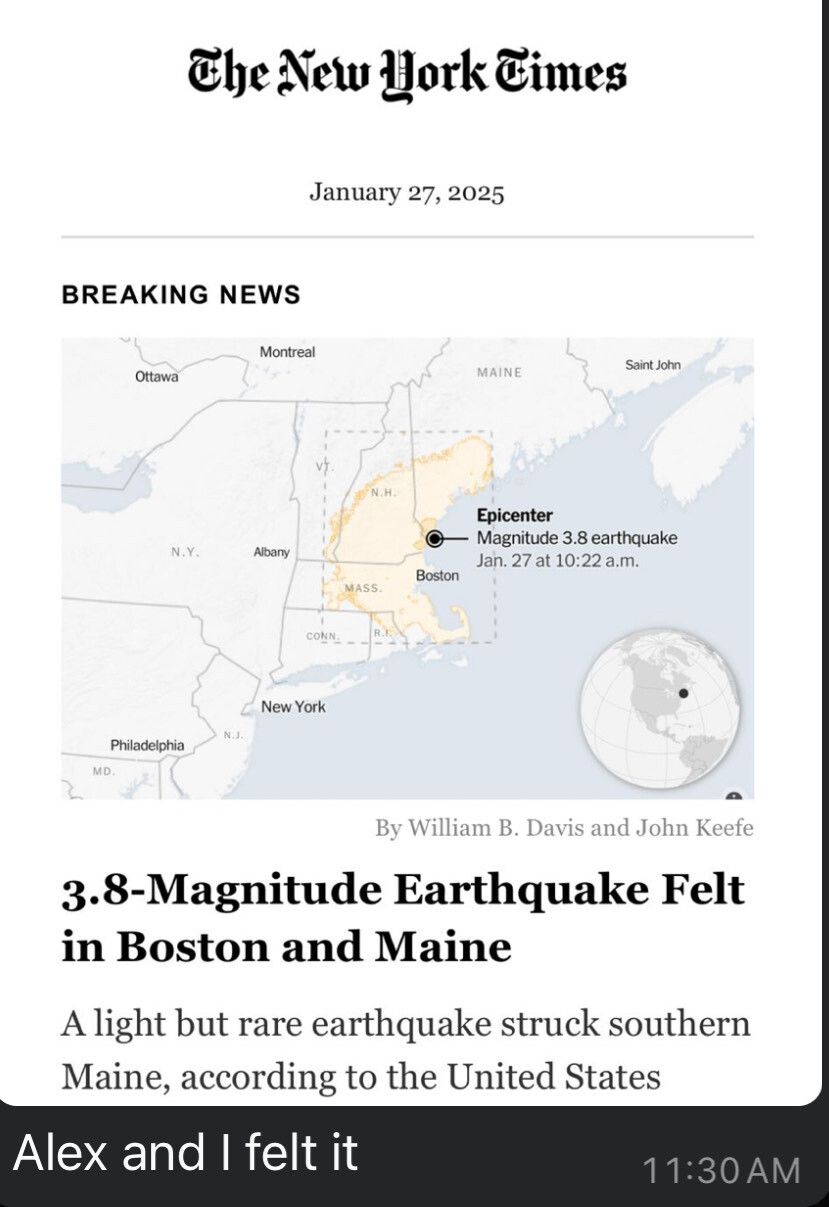
Boston has earthquakes?? My sister texted me to tell me that she felt an earthquake and is ok. I’m glad she, my niece and nephew are fine, I just didn’t know that to be on my worry list for her.
Today, I’m writing you all from my desk, still shivering in a wet hoodie. I had an hour in between calls and decided to get a short run in. I’m not sure it was worth it. It was cold, rainy, and just not ideal - the kind of day where my hands actually hurt from the cold.
You know how many other people I saw during that 3 miles? Two.
One guy was sitting on a bench on the riverfront chilling and smoking a cigarette. Down the Riverwalk I saw a woman walking her dog.
That was it.
The Riverwalk is usually a great spot here in Wilmington. It’s a place where everyone goes on strolls in the (normally) sunny weather. And with good reason too; it’s a scenic 1.75 mile long boardwalk along the water and with some cool stop off points.

WILMINGTON RIVERWALK
I got thinking on that run:
1) I’m amazing for “braving the elements.”
2) It would’ve been better to stay dry in my nice warm studio and continue working.
3) Most people quit things very easily - myself included.
Rain ruins things so easily. Now with exception of things like concerts, amusement parks, etc. - it really should NOT be such a conveniently strong excuse. We have a umbrellas, rain jackets, gloves..
But it’s not the actual physical rain that ruins things, it’s what rain does to our mood.
No Sun = No Serotonin.
No Serotonin = Sadness
It’s true! My sister would prefer little earthquakes over rain any day of the week.
The irony: When we push through when most people wouldn’t, doesn’t it feel ...good? There’s something about pushing ourselves when others won’t push themselves even a little that creates a bit of pride, accomplishment, and even low key supremacy.
Going against the grain is good for us. And the content creators who do this regularly are the ones that inspire us. See, we mind the rain. They don’t.
They don’t linger waiting for inconveniences to rescue them from the work that has to be done. I on the other and can be guilty of this. But at least I’m counting this weekly email as creating! I like to write and want to get better at it.
Today we’re going to discuss a huge intangible in podcasting and content creation that can help you build a loyal audience that may compel you to push through the rain next time.
Sometimes we gotta create our own sunshine.
Now that I’m done rhyming..
Welcome back to UNFLTR - the newsletter that helps you untangle your podcast & content hold ups and get to work.
In today’s UNFLTR:
Claiming your podcast on Amazon Music
The intangible between good and great content
A podcast metric way more important than Downloads
QUOTE OF THE WEEK :
Winning is the best deodorant.
- someone
(In my Notes app I jot down anytime hear an amazing quote. I just forget to take the name down)
Claim Your Podcast on Amazon Music
Claiming your podcast on multiple platforms like Amazon may not be an immediate priority, but I’d still recommend doing it.
Context: Your podcast host is where you create and upload your podcast and they provide you with an RSS (Really Simple Syndication) Feed. This distributes your podcast to podcast players. You may know some like Spotify for Creators, Captivate.fm, Buzzsprout, etc.
Amazon Music, the podcast player in this case, then distributes your podcast to its subscribers. They do not host. Other players include Apple, Spotify, Overcast, etc.
Why Claim: Amazon has 55 Million global customers and growing rapidly and “[…] enabling your content to be distributed on Amazon Music and Audible allows you to grow your audience by reaching these customers, many of whom will be new to podcasting.”
Now that is actually bullshit. First, your podcast host can enable distribution on Amazon Music amongst others. Second, having it on there doesn’t grow your audience in itself. Reminder: growing a podcast requires a lot more work than simply putting it out into the world.
But claiming it does allow you to have more control of your pod on the platform and manage the podcast page, track stats, etc. You want Amazon to know you own it, you want analytics from specific platforms whenever you can get them, and you can write the promotional team to try and get featured.
Lastly, Audible has a podcast section where you can be discovered. It’ll be a similar but separate claiming process. This will come in handy when anyone you know talks about listening to things on Audible. You can tell them “My podcast is actually on Audible.” You can get them to sub there on the spot if you’re lucky. Either way, they’ll remember you next time they’re on.
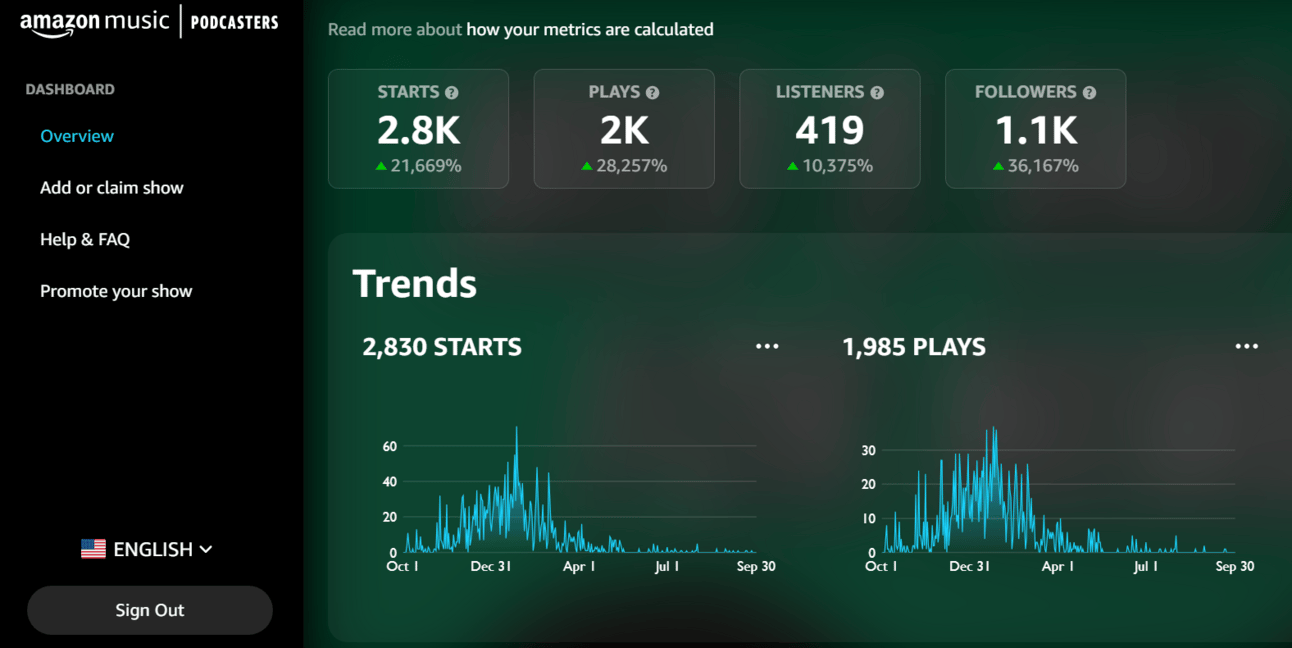
Some of my old stats from 2022.
How to do it (in pictures)
***Before you do anything, copy your RSS Feed from your podcast host***
Now let’s begin. It takes 5 min max.
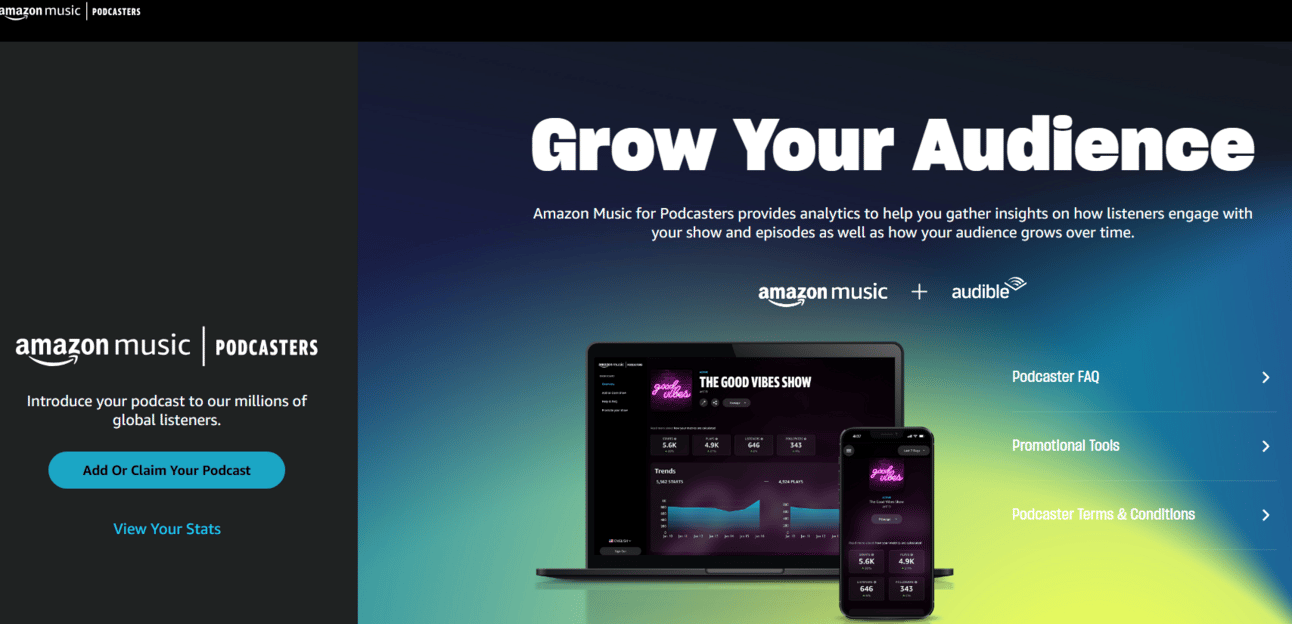
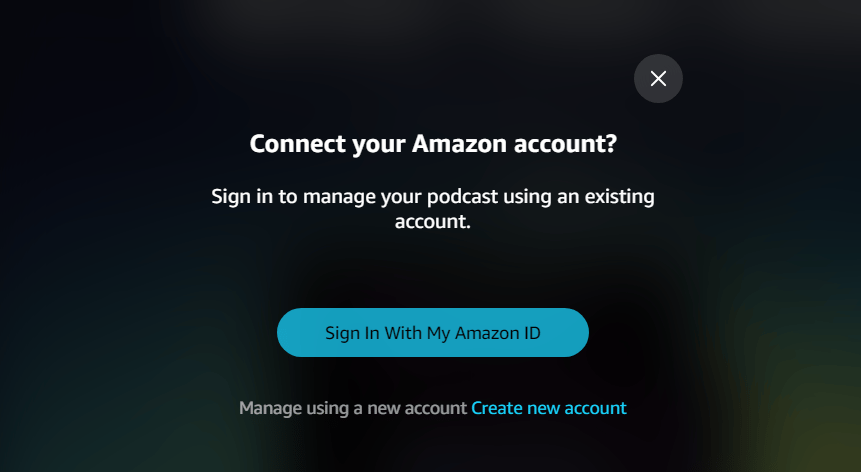
Sign in with you Amazon ID or Create New Account
Note: Your Amazon ID is usually a person’s account which means a personal email - not your podcast email. Meaning if I have the [email protected] - THAT email needs to have an Amazon account. I know, it’s stupid.
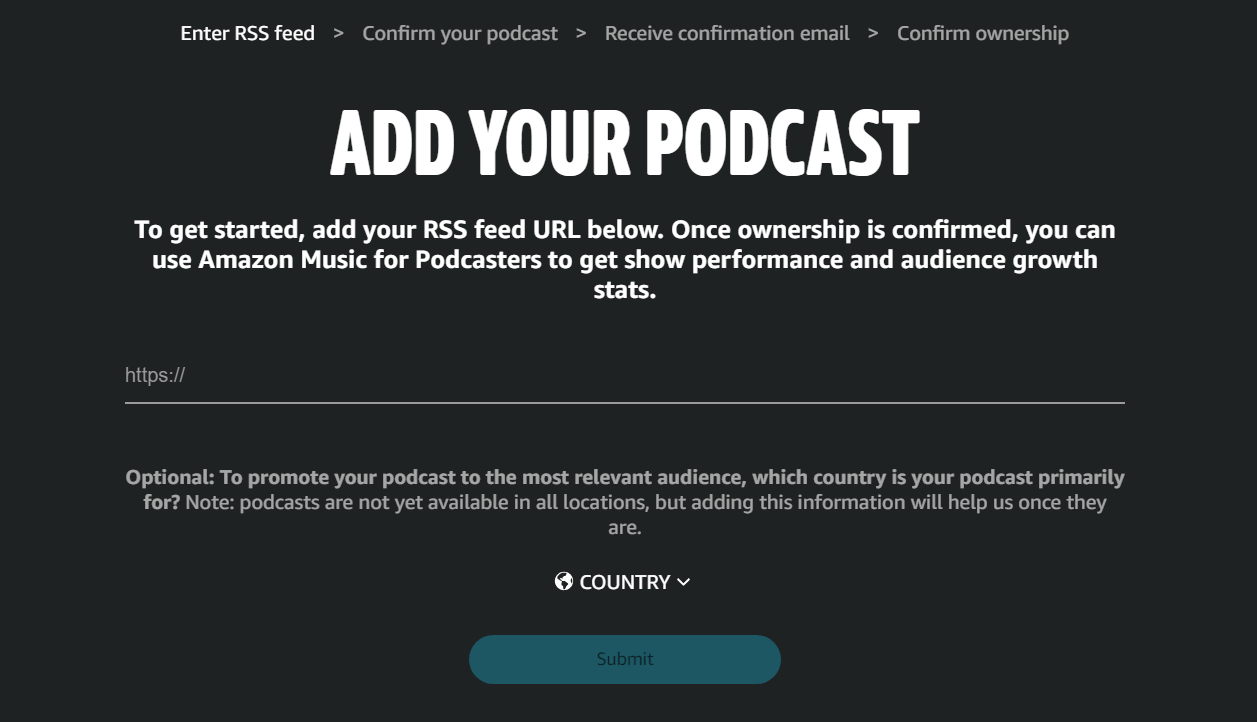
Enter your RSS Feed and select country
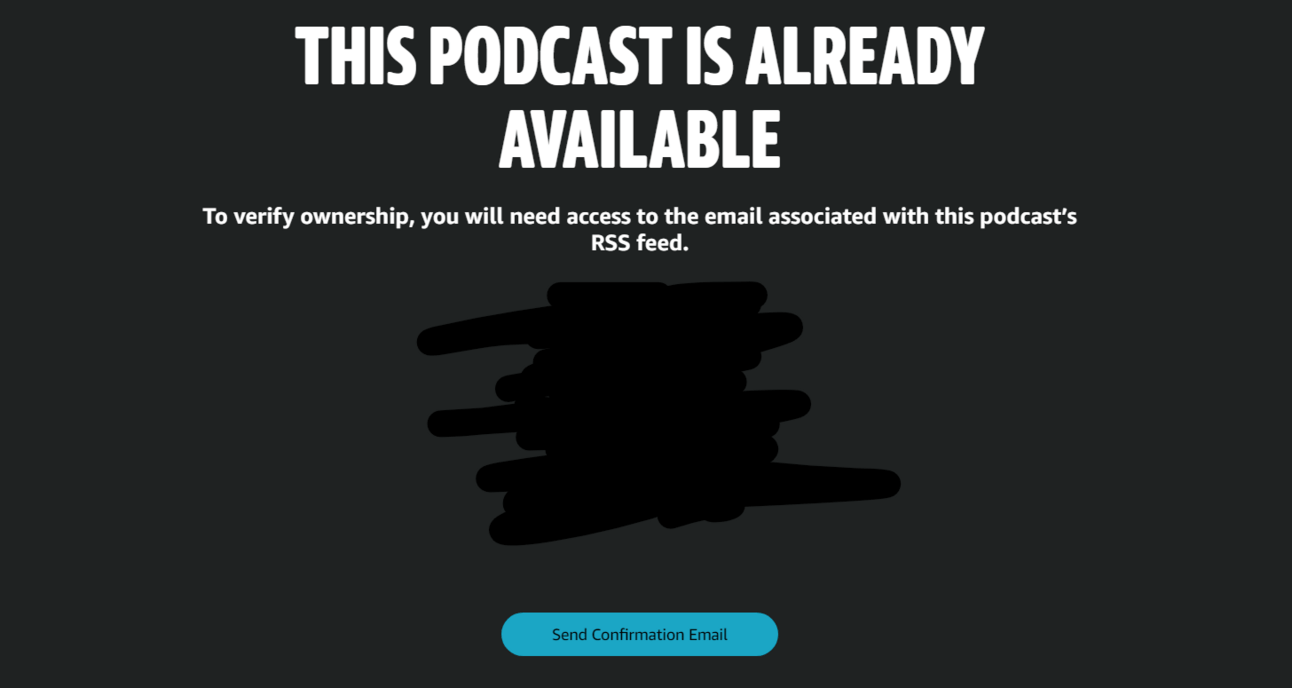
Click Send Email and Confirm it from your Email
And that’s it. The show was already on Amazon Music most likely, but now you can go learn about your audience. Even if it’s a little, its worth it.
A Loyal Audience Awaits
Growth is what we all want when it comes to content. But sometimes we forget the value of loyalty.
As someone if their 40’s (I think that’s still outside of Boomer territory right?), I can tell you that each year I feel like my friend circle gets smaller.
Decrease in casual friends = Increased dedication to loyal friends.
Look, at this point we know who’s reliable in our lives and who isn’t. And we are seen as one or other as well. It’s simple - someone you consider loyal likely…
consistently shows up for you (not just in good times)
is altruistic and doesn’t keep score
are super trustworthy and lives with integrity
doesn’t judge you
supports you (almost blindly)
will probably help you move
Casual friends may exhibit some of these in flashes, but not on the regular.

A group of people pretty loyal to each other
When it comes to content, loyal friends and casual friends correlate to your CORE Audience and your CASUAL Audience.
Your CORE audience are people deeply invested in your content, highly engaged, don’t miss an episode or post, and they recommend the hell out of it. These are the people that DM you with feedback, share your stuff with others any time it makes sense to do so, and are just generally aligned with your values. They are … loyal.
A CASUAL audience are people who might check out your podcast or content every now and then, but definitely not invested in it or your personal brand. They may drop in for a super specific topic or guest but that’s really about it. They consume your content sporadically, but don’t really support it. They may also be what I call “lurkers” - people who even when they consume and enjoy, do not leave a comment or engage.
So how do you build the CORE Audience that will help you grow your show or content?
Unflinching Honesty
Give them what they want, and need.
Anyone who has at least a phone can create content, which means there’s virtually no cap on the supply … hence content fatigue. Sometimes it takes a lot of scrolling before we finally find something we like. Sometimes it takes a few podcasts to try out before we find someone we genuinely like. And at any point we can just be like “I should probably get back to work- this is stupid.”
The pattern interrupt is not ChatGPT inspired content. It’s not tips and tricks. It’s not how awesome and edit is.
The pattern interrupt in content today is when uncommon and unflinching honesty show up.
It’s the creator who makes a podcast episode about how creating will probably NOT make you the money you think it will.
It’s the mechanic who makes the video about some safe DIY car fixes while exposing how repair centers rip you off.
It’s the parenting podcast that tells you your kids don’t listen to you not because they reject your authority, but they reject you anxiety.
We are desperately seeking the truth because in our current content landscape everything has a 50/50 shot of being wrong, inaccurate, or just straight lies.
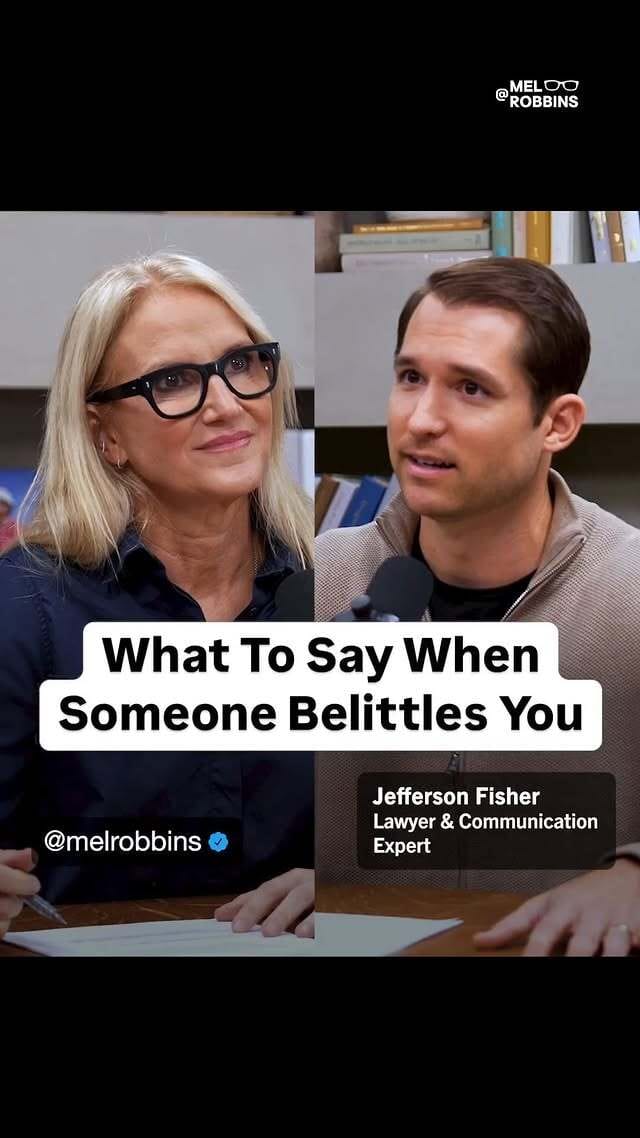
And this works to our advantage. Take trial lawyer and IG sensation Jefferson Fisher. He’s an expert communicator and a superior truth teller. Here’s an example of him unveiling something many of us might overlook:

Sometimes we make the content people want, more than we make the content our audiences needs. Trends, popular, and entertaining content might get you a bump that makes you feel good. There’s nothing wrong with that, but that doesn’t mean you’ll be proud of it.
Content people need is more about offering long-term value, going deeper, or addressing pain that people might not even realize they have. I could’ve used tutorials on every form I had to fill out the first time I bought a home. Anyway, it’s content that goes beyond surface-level enjoyment and isn’t just made to help people decompress. What we are trying to make may not grab attention fast, but it builds trust and a loyal following over time.
How to start:
Think of everything that annoys you about your work, industry, or hobby.
List it ALL down.
Mark each one that you would consider a “myth” or just not accurately portrayed online. You should be able to tell yourself “People need to know that (fill in the blank).”
Mark each of these things you actually know better than most. If you don’t, you’ll just simply run the risk of being perceived as a complainer.
Closely examine how much of content about these things you have already seen. If a lot, don’t let that deter you! If you haven’t seen content about - that probably bodes well.
Conceptualize podcast episodes, YT videos, or short form content ideas. Do not water this down! Use your own personal experience as prompts for some good storytelling. ChatGPT cannot replace you - so lean into your own life knowledge.
Get to work. Keep it real, keep it simple, and share actionable advice.
Example:
Let’s say you’re in the productivity space and you know all the ridiculous “game changing” apps that are supposed to help you actually add a lot of complication to your life (been there, done that). You write down everything and land on a topic that stands out —like how everyone says you need a million apps to be productive, when really, keeping things simple works just fine.
But YOU know that mastering a couple is actually fare more efficient.
You notice there's a ton of content about “must-have” productivity apps, but not much about how less is more.
You draft “Why You Don’t Need 10 Apps to Stay Productive” or “How to Simplify Your Tools and Actually Get Things Done So You Have More Family Time”
Then, you get to work. You record an episode sharing your own experience with overcomplicating things, and how cutting back actually boosted your productivity.
Thanks for reading UNFLTR today - I’ll see you again next week!
— Rich
P.S. Ways to work with me:
1:1 Coaching
Podcast Strategy and Management (Audio only, Video, Full Service, etc)
Filming Day here at the UNFLTR studio in Wilmington, NC
If you want to learn more get in touch with Ellie at [email protected]